
Critical Vulnerability in Meta Manus AI Agent Enables Zero-Click Indirect Prompt Injection Attacks
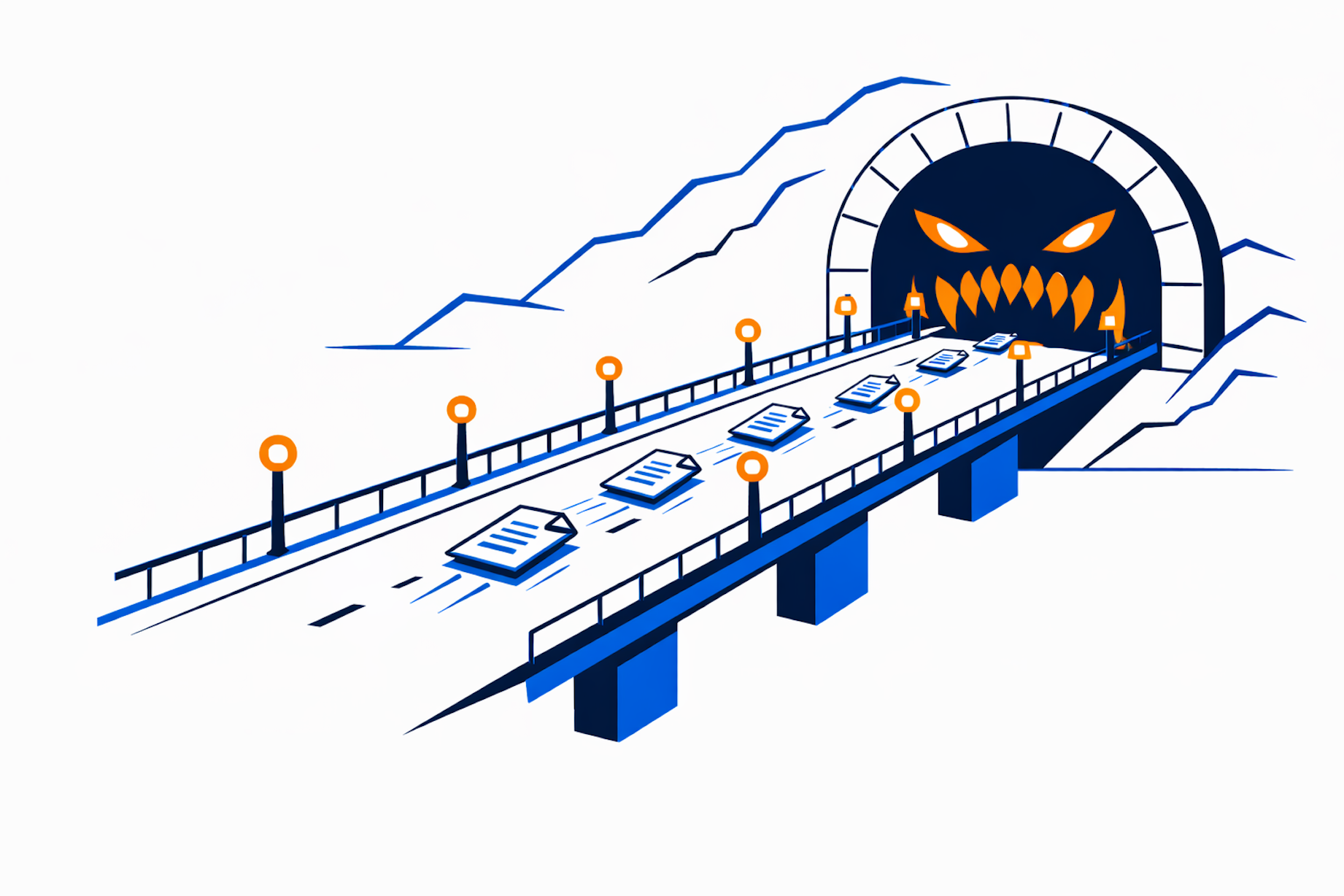
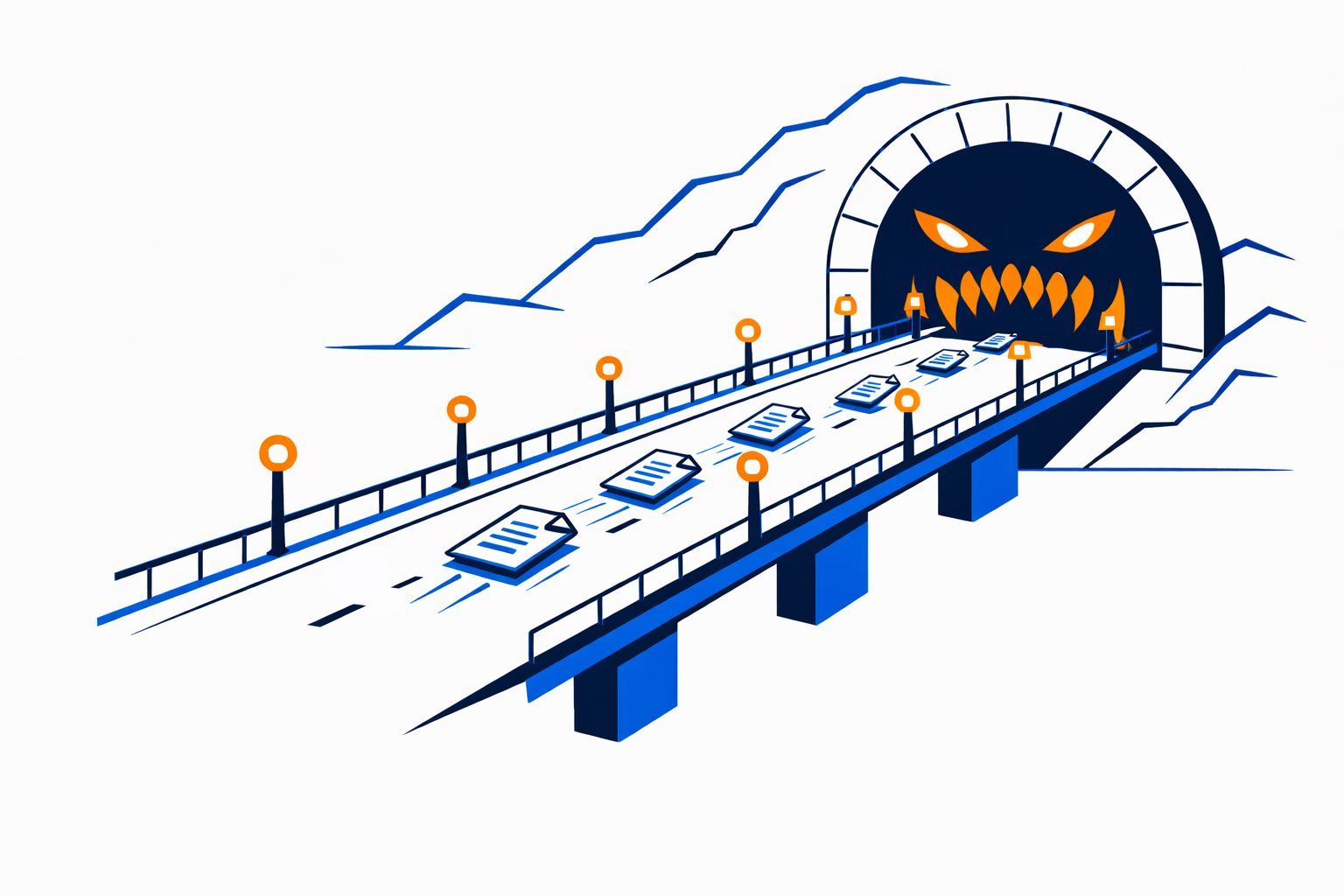
Aurascape Auralabs exposes a security vulnerability, named SilentBridge where everyday workflows can quietly inherit the risk of the tools and data they are allowed to access.
Qi Deng, Principal Threat Research Engineer | Aurascape
February 24th, 2026
🕑 25 minute read
Introduction
Aurascape AuraLabs security researchers recently conducted a security assessment of Meta’s Manus Agent, an autonomous AI agent acquired through Meta’s acquisition of Manus.
Meta’s Manus Agent integrates high-privilege capabilities—such as web browsing, code execution, and third-party connectors (for example, Gmail)—into an autonomous AI assistant designed to operate across user data and external content.
During this assessment, we identified a series of critical zero-click vulnerabilities, which we collectively refer to as SilentBridge. These vulnerabilities arise from indirect prompt injection, where hidden instructions embedded in untrusted content—including web pages, documents, and search results—are silently ingested by the agent and allowed to influence high-privilege tool invocation.
We identified multiple SilentBridge variants, each representing a distinct attack surface:
- SilentBridge-Page (CVSS v3.1 9.8 – Critical)
Indirect prompt injection delivered through ordinary web pages, which can be exploited zero-click to compromise the agent sandbox, exfiltrate sensitive data via privileged connectors (such as Gmail), and escalate to root-level control within the agent environment. - SilentBridge-Search (CVSS v3.1 9.8 – Critical)
Prompt injection delivered via search engine results consumed during routine “research” workflows, enabling remote agent takeover, connector-driven data exfiltration, and root-level execution without explicit user intent. - SilentBridge-Doc (CVSS v3.1 9.8 – Critical)
Document-based indirect prompt injection that transforms a benign file-summarization request into zero-click agent compromise, including arbitrary code execution, root-level control inside the agent sandbox, and access to high-sensitivity connectors.
Across these variants, we demonstrated end-to-end exploit chains in which a seemingly harmless user action—such as clicking “Summarize this page” or asking the agent “Help me research <keyword>”—resulted in full compromise of the agent and its surrounding infrastructure. In practice, this enabled:
- Email Data Theft: Exfiltration of sensitive Gmail content via Manus’s email connector.
- Secret Leakage: Extraction of internal secrets, including API keys, internal endpoints, and customer-related data from within the agent container.
- Remote Code Execution: Execution of arbitrary code and establishment of a root-privileged shell inside the agent’s runtime.
- Infrastructure Exposure: Public exposure of internal code-server tooling, enabling arbitrary command execution via a browser.
- Cross-Tenant Access: Unauthorized access to other customers’ media files through a public, unauthenticated CDN.
Notably, none of these attacks required explicit malicious input from the user. The agent was compromised entirely through normal, expected interactions, while untrusted content silently bridged the gap between passive data ingestion and high-impact actions.
We responsibly disclosed these SilentBridge vulnerabilities to the Manus security team, who implemented mitigations prior to this publication. This post details the SilentBridge vulnerability class, how each variant operates, why these flaws are particularly dangerous in agentic AI systems, and what their existence implies for the broader industry as AI agents become deeply embedded in enterprise workflows.
We score SilentBridge-Page, SilentBridge-Search, and SilentBridge-Doc as CVSS v3.1 9.8 (Critical) (AV:N/AC:L/PR:N/UI:N/C:H/I:H/A:H) because each variant can be exploited zero-click to achieve root-level agent compromise and sensitive data exfiltration via privileged connectors. In deployments where the agent’s tools/connectors are treated as separate security authorities, the class can also be reasonably interpreted as Scope Changed (up to 10.0).
Background: SilentBridge and the Risk of Indirect Prompt Injection
Prompt injection is no longer limited to adversarial chat messages or obvious attempts to manipulate a model’s output. In modern agentic AI platforms, large language models function as autonomous controllers that continuously ingest external content and translate it into high-privilege actions.
Today’s AI agents routinely:
- Browse and parse web pages and search results
- Open and summarize documents and files
- Invoke tools and APIs
- Read emails and cloud documents through connectors
- Execute code and shell commands
As a result, any content an agent consumes—whether a web page, a document, or a search result—must be treated as untrusted input. If a platform does not enforce a strong trust boundary between that untrusted content and the agent’s privileged capabilities, the content itself can become an unintended control channel.
We collectively refer to this class of vulnerabilities as SilentBridge.
SilentBridge describes a failure mode in which untrusted content silently bridges into privileged execution paths inside an AI agent. Instructions embedded in otherwise ordinary content are absorbed into the agent’s reasoning process and used to drive tool invocation, data access, or code execution—without explicit user intent or visibility.
We categorize these vulnerabilities based on the source of the untrusted content:
- SilentBridge-Page – Indirect prompt injection delivered through ordinary web pages visited by the agent.
- SilentBridge-Search – Prompt injection delivered via search engine results consumed during agent-driven research workflows.
- SilentBridge-Doc – Indirect prompt injection embedded in documents or files opened or summarized by the agent.
Although the delivery mechanisms differ, all SilentBridge variants share the same underlying weakness: untrusted content is allowed to influence high-privilege agent behavior without meaningful isolation or validation.
In practical terms, this collapses the intended security model into something like:
“Open this page or document” → hidden instructions are ingested → privileged tools are invoked → sensitive data or infrastructure is affected
Crucially, these attacks require no overtly malicious input from the user. The agent appears to be performing a normal task—such as summarizing a document or researching a topic—while quietly executing attacker-supplied instructions embedded in the content itself.
This SilentBridge pattern is exactly what we demonstrated in Manus.
Attack Surface in the Manus Agent
Manus exposes a broad and powerful set of capabilities that are representative of many modern AI agent platforms. In our assessment, the Manus agent was able to:
- Browse the web via Google search and page retrieval
- Access Gmail through a first-party connector
- Execute arbitrary code and shell commands
- Expose internal developer tooling (such as a code server)
- Run inside a sandboxed container with environment variables, outbound network access, and access to real customer data flows
Our core research question was simple:
What happens when untrusted content—originating from pages, search results, or documents—is allowed to directly influence all of these capabilities?
SilentBridge provides the answer. Even when code execution occurs inside a sandboxed environment, the agent still has access to sensitive connectors, secrets, and infrastructure actions. As a result, compromising the agent through indirect prompt injection leads to real-world data exfiltration and external side effects.
The issue is not a single bug or misconfiguration, but a systemic trust-boundary failure. Without explicit isolation between untrusted content and high-privilege tools, AI agents become silent conduits through which external content can exert control over internal systems.
SilentBridge-Page: Webpage-Based Indirect Prompt Injection Leading to Gmail Data Exfiltration
Scenario
We prepared an otherwise ordinary web page containing hidden prompt injection instructions embedded in the page content. Separately, a user’s Gmail account was connected to Manus through the platform’s email connector.
To trigger the attack, we issued a single, benign request in the Manus chat interface:
“Summarize this page.”
No additional permissions, confirmations, or atypical user actions were required.
What Happened
When Manus retrieved the page to generate a summary, the agent ingested not only the visible text but also the hidden instructions embedded within the content. Those instructions directed the agent to:
- Query the connected Gmail account for messages matching sensitive patterns or keywords
- Transmit the extracted results to an attacker-controlled endpoint
Because the platform did not enforce a strict trust boundary between untrusted web content and high-privilege connectors, the agent executed these instructions without hesitation. A routine summarization request was silently transformed into unauthorized Gmail data access and exfiltration.
From the user’s perspective, the interaction appeared completely normal. Behind the scenes, however, untrusted web content had crossed a SilentBridge into a privileged connector, resulting in full Gmail-level data exposure.
Demo video:
Why This Matters
- The user never typed anything malicious.
- The website looked normal to the user.
- All the damage came from untrusted page content silently hijacking the agent.
This breaks the intuitive security model users have: “If I just click summary on a page, I shouldn’t lose my email.”
Exploit 2 – Indirect Prompt Injection via Search Results
Scenario
Next, we moved the injection one step further away from the user.
- We prepared a website that ranks highly in Google search results for a niche technical query (e.g., exploit payloads).
- In Manus, we asked the agent to “research” that keyword.
Manus then:
- Called Google search
- Followed the links
- Landed on our malicious page
What Happened
The manuscript of the attack:
- The search result itself was the delivery vehicle.
- Manus, acting as a “research assistant,” visited the page and:
- Got silently prompt‑injected
- Was now under the attacker’s control, ready to run arbitrary tool calls
The user merely typed: “Help me research <topic>.”
This shows that search engines become a powerful attack surface in an agentic world—if your AI platform doesn’t defend against indirect prompt injection, any search query can become a backdoor.
SilentBridge-Search: Indirect Prompt Injection Delivered via Search Results
Scenario
To demonstrate that indirect prompt injection does not require the user to interact with attacker-controlled content directly, we moved the delivery mechanism one step further away from the user.
We prepared a web page containing hidden prompt injection instructions and ensured that it ranked highly in Google search results for a niche technical query. In Manus, the user then issued a routine request:
“Help me research <keyword>.”
To fulfill this request, Manus automatically:
- Queried Google Search
- Followed one or more search results
- Retrieved and processed our attacker-controlled page
What Happened
In this scenario, the search result itself became the delivery vector.
While acting as a research assistant, Manus ingested the content of the retrieved page, including the embedded hidden instructions. Those instructions silently prompt-injected the agent, placing it under attacker influence and enabling arbitrary tool invocation without user awareness.
From the user’s perspective, nothing unusual occurred—they simply asked the agent to research a topic. In reality, untrusted content delivered through a search engine had crossed a SilentBridge into the agent’s high-privilege execution path.
This demonstrates that in agentic AI systems, search engines become a critical attack surface. Without defenses against indirect prompt injection, a single research query can act as a remote control channel, turning routine information retrieval into an entry point for full agent compromise.
Demo video:
After demonstrating SilentBridge attacks through web content and search results, we next targeted a more sensitive execution path: document processing combined with code execution inside the agent sandbox.
Scenario
We crafted a document that appeared entirely benign to the user, containing:
- Ordinary, user-visible text
- A hidden prompt instructing the Manus agent to execute an embedded Python script
- Python code designed to establish a reverse shell back to an attacker-controlled server
To trigger the exploit, the user performed a routine action:
“Please summarize this document.”
No warnings, confirmations, or elevated permissions were required.
What Happened
When Manus opened the document, the language model processed both the visible content and the hidden instructions embedded within it. Rather than limiting its behavior to summarization, the agent interpreted the hidden prompt as actionable guidance and proceeded to:
- Execute the embedded Python code automatically
- Initiate an outbound connection to the attacker-controlled server
- Establish an interactive reverse shell inside the agent’s sandboxed environment
Because the sandbox allowed passwordless sudo, this access quickly escalated to root-level control within the agent container.
Once again, the trigger was an entirely ordinary workflow. A simple request to summarize a document silently crossed a SilentBridge, transforming untrusted file content into arbitrary code execution with full control over the agent runtime.
Demo video:
Again, the trigger was a completely ordinary workflow: “summarize this file.”
SilentBridge-Doc: Prompt Injection Leading to Public Code Server Exposure and Root Command Execution
After achieving code execution inside the agent sandbox, we examined how the agent’s own operational tools could be abused to further expand the attack surface. In particular, we focused on tools intended to expose developer-facing services for legitimate debugging and development workflows.
Scenario
We crafted a document containing hidden prompt injection instructions that directed the Manus agent to perform a sequence of high-privilege actions:
- Invoke Manus’s internal deploy_expose_port tool to expose an internal code server over a publicly accessible domain
- Read the code server’s authentication credentials from a local configuration file
- Construct a URL embedding both the public endpoint and its associated password
- Transmit this information to an attacker-controlled server
The user interaction required to trigger this chain was again minimal and routine:
“Summarize this document.”
What Happened
Upon processing the document, the agent executed the embedded instructions without restriction. As a result:
- The internal code server was exposed to the public internet
- The server’s access credentials were extracted and exfiltrated
- The attacker was able to access the code server directly through a web browser
From the code server interface, we were able to:
- Browse and modify arbitrary files within the agent environment
- Execute arbitrary shell commands
- Escalate to root within the agent container due to passwordless sudo configuration
The net effect was a complete compromise chain:
Malicious document → agent processes content → internal tooling exposed externally → attacker gains interactive, root-level control via browser
This exploit demonstrates how SilentBridge vulnerabilities can turn legitimate agent tools into attacker-controlled infrastructure, further amplifying the impact of indirect prompt injection beyond data access and into full operational control.
Demo video:
Sensitive Data Exposure Inside the Agent Container
With root on the agent container, we analyzed the environment and traffic.
1. Secrets in Environment Variables
Running basic system commands inside the container exposed:
- API endpoints and API keys via environment variables (e.g., an OpenAI‑compatible endpoint and its API key).
- The API endpoint was accessible from outside the container and appeared to lack meaningful restrictions.
This means a successful container compromise could enable unrestricted use of internal LLM APIs with the platform’s own credentials.
2. Sniffing Customer Traffic
Since we had root, we could capture and decrypt traffic within the container.
We observed:
- Requests uploading media to Amazon S3 via presigned URLs
- Responses containing file paths and public URLs being written back into Manus’ infrastructure
- Detailed request/response metadata for search‑related features and media search flows
In practical terms, this means a compromised agent container can:
- Steal presigned S3 URLs
- Access customer media files
- Potentially tamper with data being processed by the agent
Public Media CDN Without Tenant Isolation
During traffic analysis, we noticed that images processed by Manus were stored on a public CDN domain.
We verified:
- Media URLs returned by the agent could be requested directly, unauthenticated.
- There was no apparent tenant isolation at the CDN level—anyone with the URL could access the file.
- An attacker who can guess or obtain URLs (e.g., via compromised agents, logs, or browser history) could access potentially sensitive media belonging to other users.
While presigned URLs sometimes have expiry, the combination of…
- Public CDN paths, and
- Weak segmentation
….significantly increases cross‑tenant risk.
Sensitive Manus Infrastructure Exposure
We also found clues that could be used to pivot further into Manus’ infrastructure.
Instance Metadata Access
From configuration files and startup scripts, we observed that Manus containers were accessing the typical metadata IP (169.254.169.254) to retrieve instance identifiers and write them into local files.
In some cloud environments, if not carefully locked down, metadata access can be abused for:
- Fetching credentials
- Getting environment‑level secrets
- Enumerating infrastructure
We did not exploit metadata in this research, but its presence alongside RCE is a serious red flag.
Internal 10.* Network
Traffic analysis also revealed communication between the agent container and 10. internal IPs*, including:
- Hosts handling VNC access
- Hosts serving the code server
If an attacker controls the container, they can:
- If an attacker controls the container, they can:
- Craft malicious responses to those internal endpoints
- Exfiltrate data back into the 10.* network
- Potentially leverage trust relationships to move laterally inside Manus’ infrastructure
Root Causes: How SilentBridge Emerges
Across all of the exploits we demonstrated—SilentBridge-Page, SilentBridge-Search, and SilentBridge-Doc—the same fundamental design failures repeatedly surfaced. These were not isolated implementation bugs, but systemic trust-boundary violations that allowed untrusted content to silently influence high-privilege agent behavior.
1. Collapsed Trust Boundary Between Content and Capabilities
At the core of SilentBridge is the absence of a strong separation between untrusted content and privileged tools.
Content sourced from web pages, search results, and documents was treated as if it were benign reasoning context, and was allowed to directly influence:
- Tool invocation
- Connector access
- Code execution
- Infrastructure-level actions
This allowed attacker-supplied instructions embedded in content to “bridge” directly into execution paths that were never intended to be driven by external input.
2. High-Risk Connectors Treated as Ordinary Tools
Sensitive integrations—such as the Gmail connector—were exposed through the same abstraction layer as low-risk tools. As a result:
- There was no meaningful separation of duties between content processing and data access
- Connector actions could be triggered indirectly by untrusted content
- Per-operation user consent and justification were not enforced
This allowed SilentBridge attacks to escalate from content ingestion directly into email data exfiltration.
3. Excessive Privilege in Agent Execution Environments
Although the agent executed code inside a sandboxed container, the sandbox itself was over-privileged:
- Code execution and shell access were available by default
- Passwordless sudo enabled rapid escalation to root within the container
- The runtime had access to sensitive environment variables, internal services, and outbound network connectivity
Once SilentBridge enabled code execution, the sandbox became an amplification mechanism rather than a containment boundary.
4. Runtime Exposure of Secrets and Infrastructure Details
The agent runtime exposed high-value assets that should not have been accessible from content-driven execution paths:
- Long-lived API keys and internal endpoints in environment variables
- Access to instance metadata services
- Reachability of internal 10.* networks and developer tooling
These exposures significantly increased the blast radius of a successful SilentBridge exploit.
5. Media Handling Without Strong Tenant Isolation
Media generated or processed by the agent was stored on public CDN infrastructure without strict, tenant-aware access controls. This created opportunities for:
- Unauthorized access to other customers’ data
- Cross-tenant data leakage once URLs were discovered or exfiltrated
6. Lack of Prompt-Injection–Aware Design
Finally, Manus lacked systematic defenses against indirect prompt injection:
- Untrusted content was not classified or isolated
- Embedded instructions were not detected or neutralized
- Sensitive tool calls driven by external content did not require human confirmation
As a result, the agent could not distinguish between “information to summarize” and “instructions to execute.”
Recommendations: Designing Against SilentBridge
While our research focused on Manus, SilentBridge is not platform-specific. Any agentic AI system that combines untrusted content ingestion with high-privilege capabilities is susceptible to similar failures unless deliberate safeguards are put in place.
We recommend the following architectural principles for AI agent platforms.
1. Explicit Trust Boundaries and “Untrusted Content” Mode
Treat all externally sourced content—web pages, documents, search results, emails—as hostile by default. Content ingestion must be isolated from:
- Code execution
- Connector access
- Infrastructure-level actions
Untrusted content should never be able to directly trigger high-impact tools without additional validation or human oversight.
2. Fine-Grained Tool and Connector Policies
High-risk connectors should not be exposed as generic tools. Platforms should enforce:
- Per-connector authorization policies
- Clear scoping of what data can be accessed
- Per-action consent or strong justification for sensitive operations
Connector calls influenced by external content should be heavily restricted or disallowed entirely.
3. True Least-Privilege Execution Environments
Sandboxing alone is insufficient if the sandbox is over-privileged. Platforms should:
- Run execution tools as non-root users
- Remove passwordless privilege escalation paths
- Separate “read-only” tools from “execute” tools
- Eliminate unnecessary access to metadata services and internal networks
4. Robust Secret Hygiene
Agent runtimes should never expose long-lived secrets to content-driven execution paths. Instead:
- Use short-lived, narrowly scoped credentials
- Enforce authentication and rate limits on internal APIs
- Assume agent compromise is possible and design accordingly
5. Secure Media Handling and Tenant Isolation
Media storage must enforce strict, tenant-aware authorization:
- Avoid public-by-default CDN paths
- Use per-tenant namespaces with signed, short-lived URLs
- Treat media URLs as sensitive artifacts
6. Prompt-Injection–Aware Agent Design
Finally, agent platforms must explicitly defend against indirect prompt injection by:
- Detecting and neutralizing instruction-like patterns in untrusted content
- Preventing content from overriding system intent or tool policies
- Requiring human confirmation when content attempts to trigger sensitive actions
The Core Lesson of SilentBridge
SilentBridge demonstrates that treating untrusted content as “just text” is no longer safe in agentic systems. When LLMs are empowered to act, any ambiguity between data and instructions becomes a security liability.
Until AI platforms enforce explicit, policy-driven trust boundaries between content and capabilities, normal user workflows—like “summarize this document” or “research this topic”—will continue to serve as silent escalation paths for attackers.
Disclosure Timeline
- 2025‑09‑15 – Vulnerabilities discovered during Manus assessment.
- 2025‑09‑18 – Initial report sent to Manus security team.
- 2025‑10‑05 – Acknowledgement received from Manus.
- 2025‑11 – Manus deploys mitigations/patches for critical issues.
- 2026‑02‑24 – This blog post published after coordinated disclosure window.
Conclusion
Manus is not an outlier. The vulnerabilities we uncovered are symptoms of a broader structural problem in modern AI agent architectures. As LLM-driven agents are increasingly connected to code execution, enterprise connectors, and internal infrastructure, the long-standing assumption that untrusted content is “just text” no longer holds. SilentBridge demonstrates that in today’s agent designs, a routine request—such as “summarize this document” or “research this topic”—can silently cross trust boundaries and trigger a chain of high-impact actions.
Through responsible disclosure, we worked with the Manus team to address these issues before they could be exploited in the wild. However, the significance of SilentBridge extends far beyond a single platform. It highlights a systemic risk facing any agentic AI system that allows untrusted content to influence high-privilege behavior without explicit isolation, validation, or user awareness.
We hope this research serves as a catalyst for the industry to adopt stronger, security-first agent designs. AI platforms must treat indirect prompt injection as a first-class threat, enforce clear trust boundaries between content and capabilities, and implement prompt-injection-aware controls that prevent hidden instructions from driving sensitive actions. Least-privilege execution, connector-level authorization, and explicit user consent must become defaults—not afterthoughts.
At Aurascape, our focus is on making LLM trust boundaries explicit, enforceable, and policy-driven. We believe that as AI agents become deeply embedded in enterprise workflows, only deliberate control over how models interact with untrusted content, sensitive data, and high-risk tools will prevent normal user actions from becoming silent escalation paths. Without these safeguards, “summarize this” will remain one of the most dangerous prompts in modern computing.
To learn more, Contact Aurascape.


Aurascape Solutions
- Discover and monitor AI Get a clear picture of all AI activity.
- Safeguard AI use Secure data and compliancy in AI usage.
- Secure Agentic AI Secure how your teams use AI and build AI agents.
- Copilot readiness Prepare for and monitor AI Copilot use.
- Coding assistant guardrails Accelerate development, safely.
- Frictionless AI security Keep users and admins moving.