
AI Security Slop Is Everywhere. Smart CISOs Know the Difference.
At RSA, the gap between AI security messaging and AI security architecture was impossible to miss. In fast-moving markets, labels spread quickly. Real innovation does not.
Chris Morosco, Aurascape VP & Head of Marketing
March 30th, 2026 | 🕐 5 minute read
Introduction
Walking the RSA floor this year, I kept having the same reaction: this market is drowning in AI security slop.
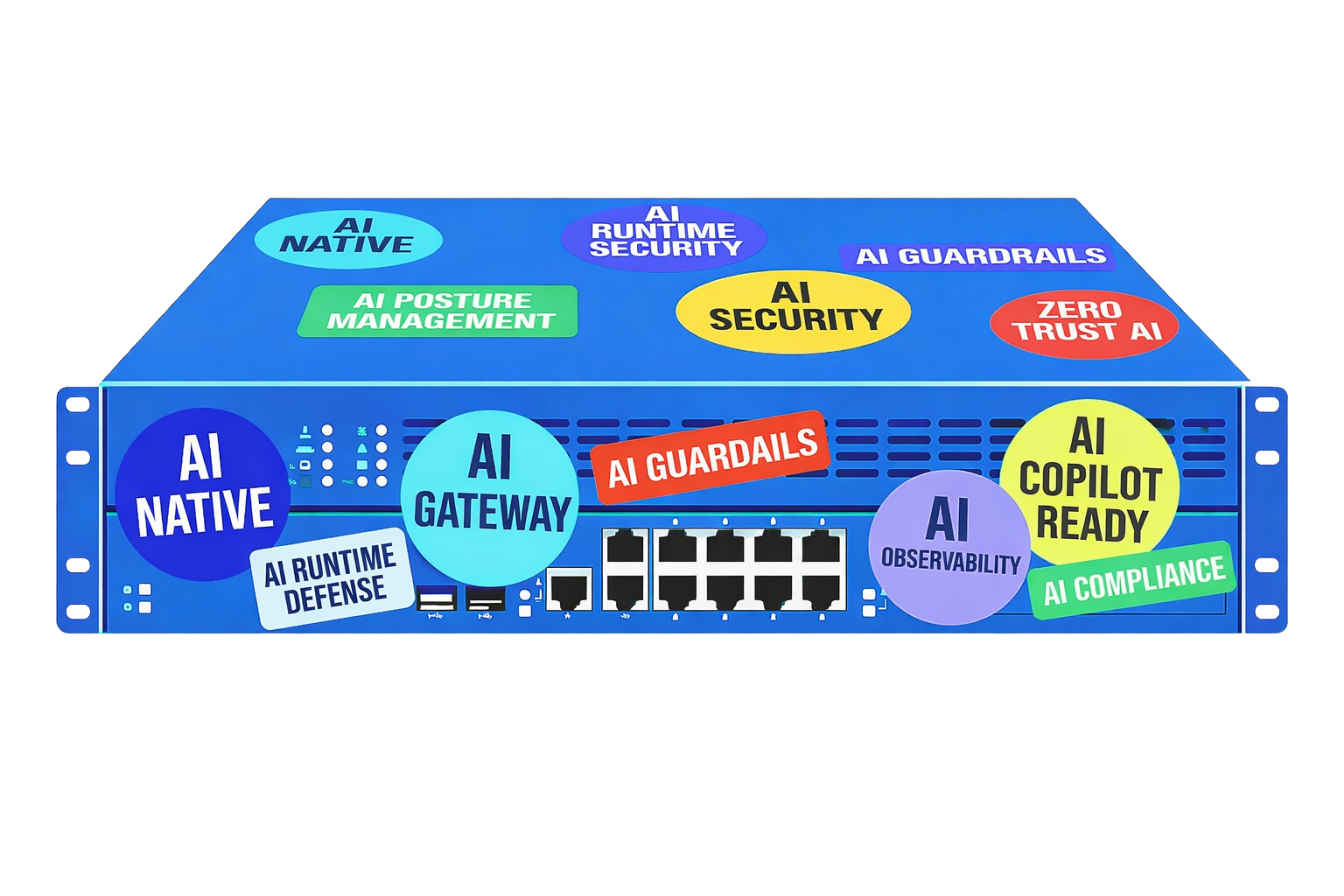
Everywhere I looked, vendors were saying some variation of the same thing. AI-native. AI-ready. AI gateway. AI trust. AI posture management. AI runtime defense. AI observability. AI compliance. The wording shifted, but the structure stayed the same. A familiar security product, a fresh layer of AI language, and a strong implication that the vendor had somehow transformed alongside the market. For security leaders trying to make serious decisions in a high-pressure moment, it had to be exhausting. I know it was for me.
I say that as someone who has spent 15 years as a product management leader and 10 years in product marketing. I have watched this pattern repeat through every major platform shift in security. A meaningful change hits the market. Customers feel urgency immediately. Budget and executive attention begin to move. Then the repositioning starts. Legacy vendors rewrite the story around products they already have. New vendors do the minimum needed to attach themselves to the trend and capture fast revenue. Marketing teams are pushed to make the old look new and the incomplete look inevitable. Before long, the market fills up with language that sounds timely but explains very little.
That does not mean everyone talking about AI is bluffing. Some companies are building real technology. Some are adapting responsibly. But a remarkable amount of what showed up at RSA felt less like innovation and more like relabeling. The badge count on the box went up. The architecture did not.
That distinction matters more than ever. In security, labels are cheap. Architecture is hard. It takes time, conviction, and technical depth to build for a real market shift. When a market is moving fast, messaging velocity can easily be mistaken for product maturity. Smart CISOs know better than to buy the label alone, but the noise still comes at a cost. It consumes evaluation cycles. It muddies buying criteria. It makes it harder to separate vendors built for the new problem from vendors trying to market their way around it.
You Can’t Fake Architecture
What makes this moment especially important is that the market is evolving faster than many of these vendors are equipped to handle. AI security is not standing still long enough for legacy architectures to catch up through minor adaptation. The protocols used by AI are already shifting. WebSockets, Protobuf, QUIC, and other modern communication methods are becoming increasingly central to how AI applications and AI agents actually operate. At the same time, the environment has already moved far beyond simple generative AI use in a browser tab. First came general-purpose GenAI. Then embedded AI spread across SaaS applications and websites. Now agentic systems are introducing software that can reason, access tools, invoke actions, and operate across environments with increasing autonomy. OpenClaw is one example of where that shift is heading. This is not a cosmetic evolution. It is a structural change in how software behaves and how risk moves.
That structural change exposes a hard truth. Vendors that did not build an AI architecture capable of identifying and opening these AI-specific TLS connections, interpreting them correctly, and doing so without breaking applications are still trying to solve yesterday’s problem while the market has already moved on. Many can still classify destinations. Some can inspect fragments of content. Some can add policy language and dashboards that look modern. But that is not the same as understanding AI interactions at the level where control actually matters. It is not the same as seeing how context moves through a model interaction. It is not the same as understanding embedded AI behavior inside trusted applications. It is not the same as governing how an agent reaches for tools, touches data, or takes action across systems.
And in security, being late to the architecture shift is not a branding problem. It is a defensive problem.
Security is an arms race. It always has been. Attackers adapt quickly. Techniques shift quickly. The surface area expands before most organizations are ready for it. Defense has to move even faster just to avoid falling behind. AI raises the stakes because the attack surface is not just bigger. It is changing shape in real time. The risk is no longer limited to users pasting text into a public chatbot. It now includes embedded AI inside sanctioned applications, autonomous workflows, tool-connected agents, machine-speed decision loops, and new channels of interaction that legacy controls were never designed to interpret. If a vendor cannot see those interactions, decode them accurately, and enforce policy in real time, then defense does not merely lag. It falls further behind while the risk accelerates.
The Questions That Actually Matter
This is why so much of the current AI security messaging feels hollow to experienced buyers. A large portion of the market is still describing AI through the categories of the last era because that is what their products were built to understand. But AI is not just another destination to classify. It is not just another app category. It is not simply another content inspection problem. The meaningful event is no longer just where traffic goes. It is what is being asked, what context is being shared, what model is producing, what tool is being invoked, what authority is being exercised, what downstream system is being touched, and whether that entire sequence of interaction should have been allowed in the first place. That is a fundamentally different control problem. It demands a fundamentally different architecture.
Forward-thinking CISOs already understand this. They know this is not another feature wave that can be absorbed into the existing stack with a few naming updates and a slide refresh. They know AI changes the unit of security analysis. Visibility into destinations is not enough. Prompt logging is not enough. A small handful of integrations is not enough. They need visibility into interactions, intent, and outcomes. They need controls that work inline and in real time. They need coverage across public AI applications, embedded AI, enterprise copilots, local agents, browsers, desktop environments, and custom-built agentic systems. Most of all, they need technical honesty from vendors. Not what the booth says. Not what the category map says. What the architecture can actually see, decode, understand, and enforce.
That is where the market starts to separate.
The most sophisticated CISOs are asking a better class of question now. What traffic do you actually understand? Which protocols can you identify and open without breaking the experience? What happens inside encrypted, stateful AI connections? What happens when an employee uses embedded AI inside a sanctioned business application? What happens when a local agent accesses data on a device? What happens when an agent invokes a tool, reaches into an internal system, or takes an action on behalf of a user? What happens when a model produces unsafe, non-compliant, or business-sensitive output? Can policy be enforced across prompts, tool calls, and outputs? Can you govern AI wherever it appears, or only in the narrow places your legacy architecture already understands? These are not marketing questions. They are architecture questions. And architecture questions are where the difference between noise and innovation becomes very hard to hide. These are not marketing questions. They are architecture questions. And architecture questions are where the difference between noise and innovation becomes very hard to hide.
Where the Market Goes From Here
The good news is that markets do correct. They always do. Over time, hype loses force and reality takes over. The vendors that treated AI as a rebranding exercise start to get exposed. The vendors that actually built for the shape of the new problem begin to stand apart. And the security leaders who recognized that difference early are usually the ones who come out ahead. They avoid dead-end tools. They avoid wasting precious time on architectures that cannot evolve with the market. They make better bets earlier, and they create the conditions for safer, faster adoption across the business because they aligned to the future before everyone else was forced to.
That is the part I find most important. In every major security shift, the true innovators rise. Not because they had the loudest booth, or the cleverest category label, or the most fashionable story in year one. They rise because they built for where the market was actually going. And the security leaders who back them early tend to rise with them. They move faster because they are not constantly working around the limitations of legacy thinking. They make cleaner decisions because they are not mistaking brand language for technical truth. They earn trust inside their organizations because they can enable the business without pretending that yesterday’s controls are enough for tomorrow’s environment.
RSA made one thing very clear. The market does not need more AI labels. It needs more technical depth, more architectural truth, and more discipline from vendors who want to be taken seriously. Everyone can say AI security now. Very few can actually deliver the architecture modern AI demands.
That is exactly why Aurascape matters.
Aurascape was built for how AI actually works. Not how legacy security products wish it worked. That means understanding and controlling AI at the interaction layer across prompts, context, models, tool calls, and outputs. It means operating inline and in real time. It means handling the modern protocols and traffic patterns AI depends on. It means securing public AI applications, embedded AI, enterprise copilots, local agents, and custom agentic systems on one platform. It means giving security teams the ability to see what matters and control what matters, without forcing them to choose between visibility and enforcement or between innovation and safety.
The next era of security will not be won by the vendors with the best stickers. It will be won by the vendors with the right architecture. Smart CISOs already know that. The ones who act on it early will not just avoid the slop. They will help define what comes next.
To see the difference for yourself, watch the on-demand recording of the Aurascape platform launch.


Aurascape Solutions
- Discover and monitor AI Get a clear picture of all AI activity.
- Safeguard AI use Secure data and compliancy in AI usage.
- Secure Agentic AI Secure how your teams use AI and build AI agents.
- Copilot readiness Prepare for and monitor AI Copilot use.
- Coding assistant guardrails Accelerate development, safely.
- Frictionless AI security Keep users and admins moving.
- AI Governance & Compliance Move from AI policy to enforceable governance.