
Securing the New AI Control Problem
Traditional security controls destinations. AI risk lives inside the interaction: the prompt, the response, the tool call, the identity behind the action. This whitepaper lays out the architecture that secures how users, copilots, and agents use AI, on one foundation.
Move Beyond Destination-Based Controls
Legacy security was built to police destinations. It blocks bad URLs, inspects requests, and classifies files at rest. AI does not behave like that. The destination is dynamic, the request carries an instruction, not just a payload, and the sensitive data shows up inside a context window stitched together at runtime.
So, the gaps are structural, and they compound as AI agents and systems become increasingly interconnected. The same is true for the solution: it is structural, and becomes stronger as AI evolves.
This paper is about interaction-level control: policy that travels with the interaction, keyed to who is acting, what they are entitled to, and what action must be controlled.
Read the whitepaper to learn about the problem with destination-based security, why securing AI requires interaction-level control, and the architecture which makes it possible.
AI-Native Discovery
Finds the AI in use, known and long-tail, and keeps re-scoring its risk.
AI Deep Decoders
Interrogate AI tools, giving you visibility and control over intentions in the app.
AI-Native Protection
Blocks actions and coaches users in real-time to protect data and prevent threats.
Read the Whitepaper
Download PDFAI and agents are here to stay. The question is whether security can keep up, with visibility, attribution, and control intact.
Map your current AI control posture against the three pillars in this paper.
Use the checklist and scored report in the PDF to evaluate AI security controls.
Explore More from Aurascape
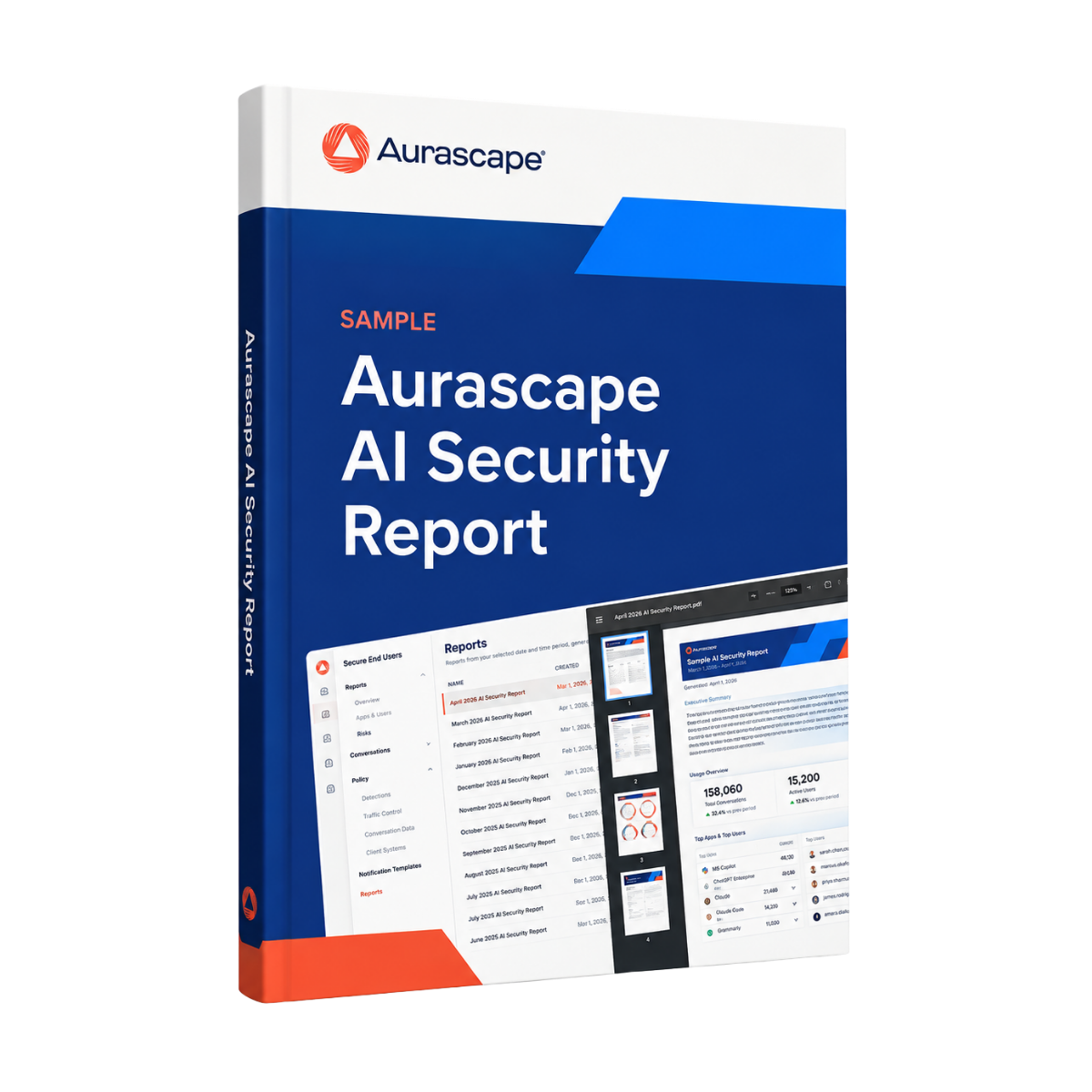

Aurascape Solutions
- Discover and monitor AI Get a clear picture of all AI activity.
- Safeguard AI use Secure data and compliancy in AI usage.
- Secure Agentic AI Secure how your teams use AI and build AI agents.
- Copilot readiness Prepare for and monitor AI Copilot use.
- Coding assistant guardrails Accelerate development, safely.
- Frictionless AI security Keep users and admins moving.
- AI Governance & Compliance Move from AI policy to enforceable governance.